
Reviewed · SCUBA DIVING
Cancún: Underwater Museum & Reef for Certified Scuba Divers
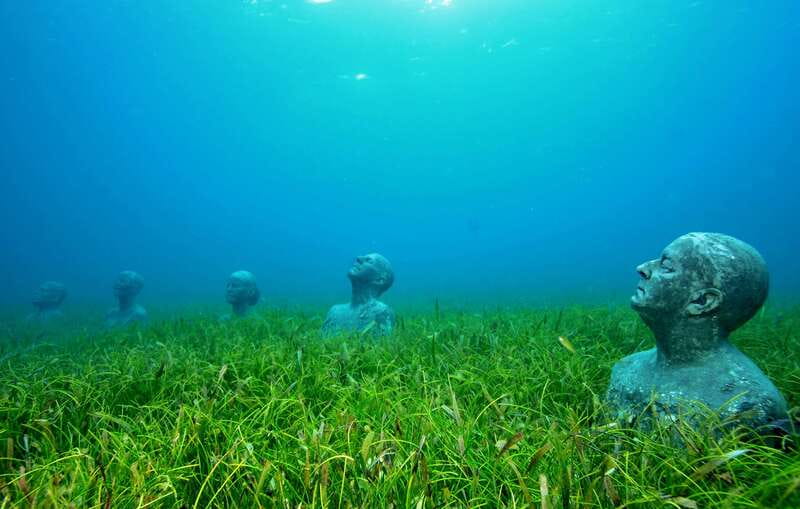
At about 30 feet below the surface, Cancún’s underwater art museum turns the seabed into a strange, quiet gallery. More than 470 life-sized statues sit among coral growth, while fish slip through doorways, around faces, and between outstretched arms. The second stop trades sculpture for natural reef, with turtles, stingrays, and colorful fish.
I like the sensible two-part plan: MUSA gives you an unusual reason to explore underwater, while Manchones Reef shows you the living marine world the museum is meant to support. I also like that the underwater portion is fairly shallow, making this a good refresher for certified scuba participants and juniors who meet the age rules.
The main drawback is that the museum portion can feel limited. One report described seeing only a small section of the art, and weather or scheduling changes may affect the outing. You’ll also pay a separate $20 reef preservation fee, and photos, videos, and wetsuit costs are extra.
In This Review
- Key points to know before booking
- Why the underwater museum is more than a photo stop
- The first stop at Manchones Reef and MUSA
- The second underwater visit at Manchones Reef
- What the shallow depth means for you
- What the $98 price really covers
- Timing, check-in, and the 4.5-hour schedule
- What to bring and what to expect at the front desk
- Who will enjoy this Cancún excursion most
- How this compares with a regular reef outing
- Book it or skip it?
- FAQ
- How long does the Cancún underwater museum activity last?
- How many scuba tanks are included?
- Do I need scuba certification?
- How deep are the underwater statues?
- What marine life might I see?
- Is the reef preservation fee included?
- Are photos and videos included?
- Can I cancel for a full refund?
Key points to know before booking
- Two separate scuba descents: One visits the underwater museum, and the other explores Manchones Reef.
- The statues sit about 30 feet underwater: You need an Open Water certification, but the depth is manageable for a refresher.
- MUSA began with only three statues in 2009: It has since grown into a large artificial reef gallery.
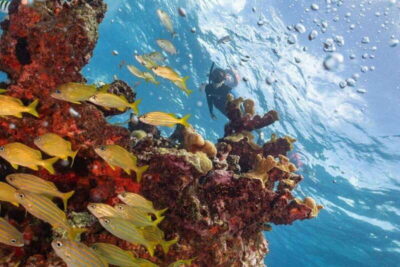
- Wildlife is part of the appeal: Turtles, a stingray, and many colorful fish have been seen on the route.
- The $98 price covers instruction and two tanks: Add $20 for reef protection, plus any wetsuit or media costs.
- Plan for 4.5 hours: English- and Spanish-speaking instruction is available, with morning check-in at the main front desk.
Why the underwater museum is more than a photo stop
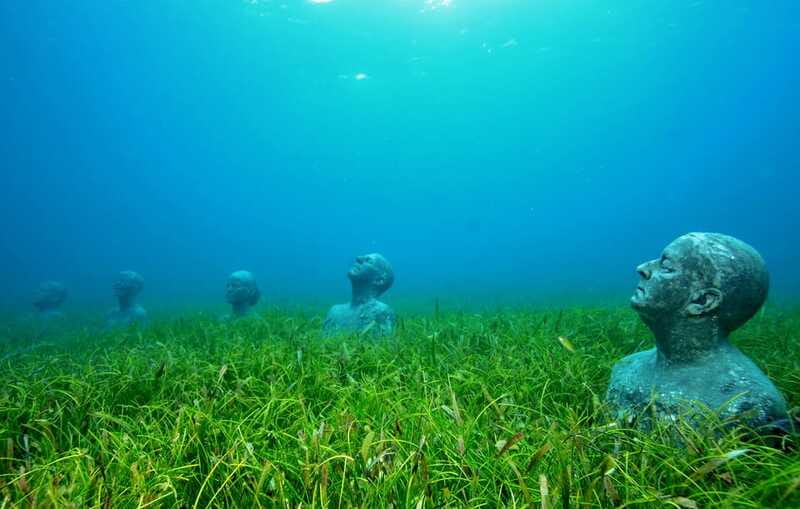
Cancún’s Museum of Underwater Art, known as MUSA, is not a conventional museum. There are no dry galleries, labels, or polished floors. Instead, you move slowly above a collection of human figures placed on the seabed, watching coral and marine life claim the work over time.
The project began in 2009 with just three statues. It later grew to more than 470 life-sized pieces. That change matters because MUSA is both an art project and an artificial reef. The sculptures provide surfaces where coral can grow and create new places for marine life to shelter.
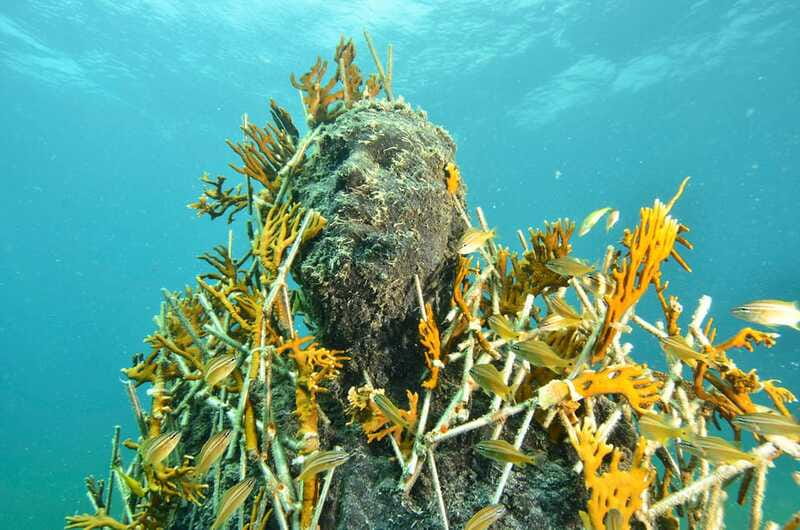
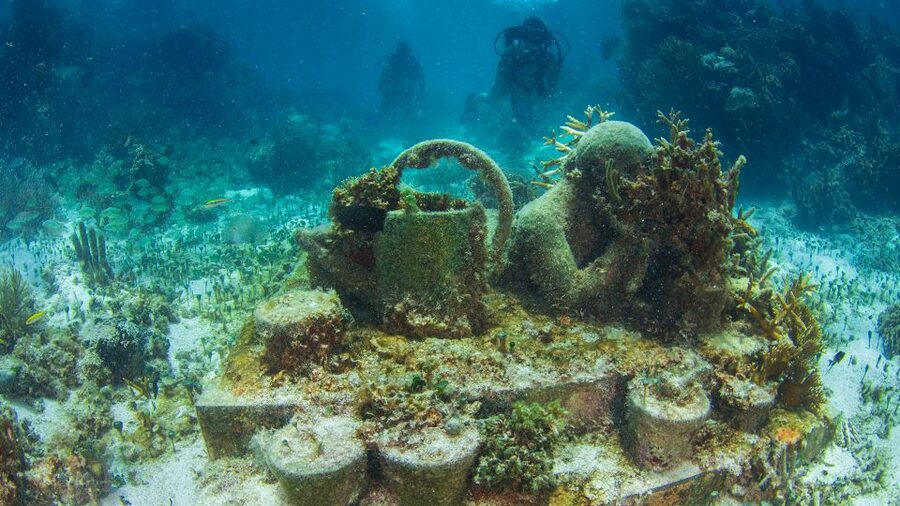
You should not expect every statue to look crisp and new. Coral-covered figures are part of the point. Some pieces may be easier to recognize than others, and the underwater setting changes how you see them. Sunlight shifts with the water, fish move through the scene, and your attention is divided between the artwork and the reef around it.
For me, that is the appeal. The museum feels less like a sightseeing stop and more like a work in progress. You see human-made forms being folded into the sea.
More dive trips off Cancun:
- 5-in-1 Cancun Snorkeling: Turtles, Reef, Musa, Shipwreck, Cenote
★ 4.5 · 1,678 reviews - Diving in the Mexican Caribbean for Beginners | 2 Tanks 2 Dives | All Inclusive
★ 5.0 · 431 reviews - Two Tanks Scuba Diving for Beginners in Cancun
★ 5.0 · 233 reviews
The first stop at Manchones Reef and MUSA
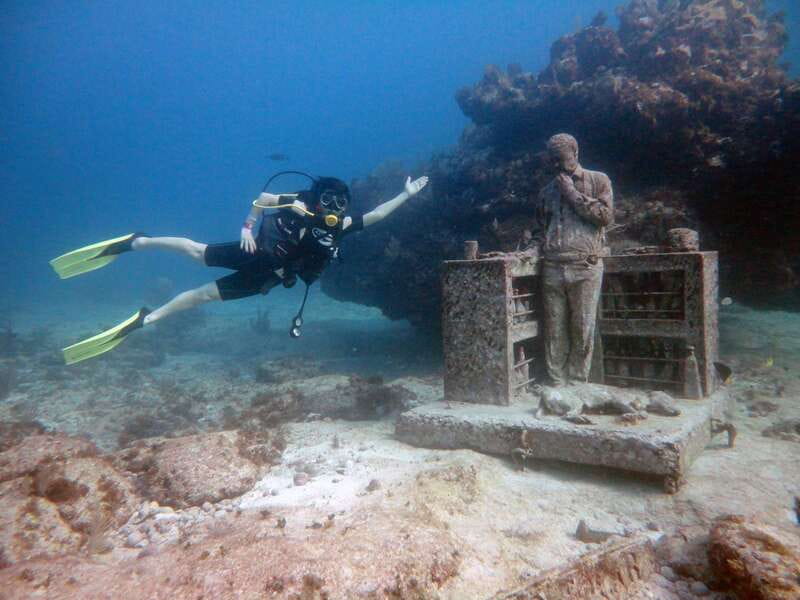
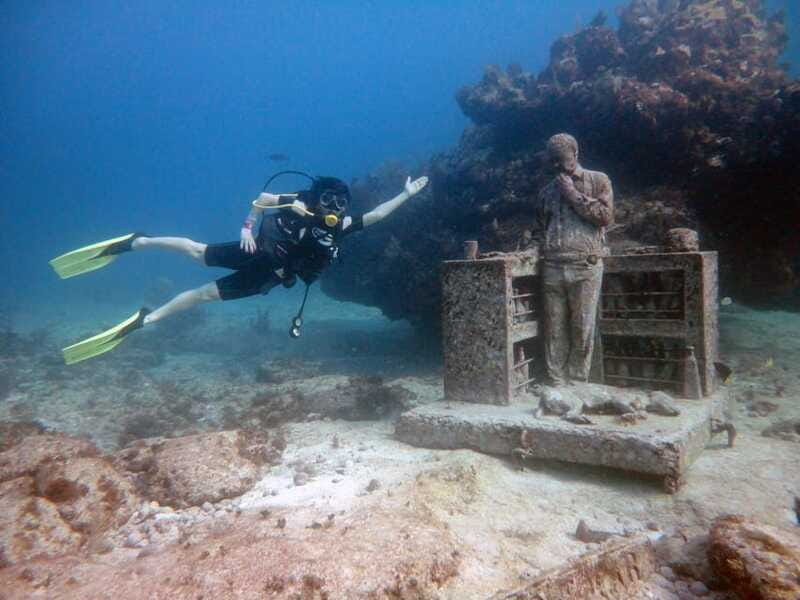
The boat takes you to Manchones Reef, where the first underwater visit focuses on the museum. The statues rest at roughly 30 feet, a depth that lets certified participants spend time looking without needing an advanced qualification.
Your instructor is included, and the activity offers guidance in English or Spanish. That matters here. Underwater sculpture is easy to miss if you are not shown where to look, especially when coral, fish, and changing light soften the outlines.
The collection is large, but the time underwater is still limited by your tank and the pace of the group. You may see a good range of figures, but do not assume you will inspect every statue. A French participant reported seeing only a small part of the museum, which is a useful warning for anyone expecting a complete tour of all 470-plus pieces.
Think of MUSA as a focused underwater gallery, not a room-by-room museum visit. The best approach is to enjoy the overall scene and give yourself time to notice the details your guide points out.
You might see fish using the statues as shelter or swimming through openings in the sculptures. Coral growth adds texture, and the artwork’s meaning shifts as the sea takes over. Even if you have visited traditional art museums around the world, this is a very different way to look at sculpture.
The second underwater visit at Manchones Reef
The second part moves attention from installed art to natural marine life. Manchones Reef brings the color and movement that many people picture when they think of a Caribbean underwater outing.
The available information points to turtles, a stingray, and plenty of colorful fish. Wildlife is never guaranteed, but these sightings show what can turn up in the area. One recent participant saw sea turtles and a stingray along with the statues, so you should keep your eyes on the open water as well as the reef itself.
I like this pairing because it prevents the tour from becoming only a sculpture viewing. MUSA gives you a clear theme and memorable visual moments. The natural reef adds spontaneity. You cannot know exactly which fish or animals will appear, and that uncertainty is part of the fun.
The natural reef may be the stronger half for some certified scuba participants. If you have already seen underwater art elsewhere, the reef offers a more traditional marine setting. If you are new to this kind of excursion, the contrast between the two stops helps you understand why the artificial reef project exists.
What the shallow depth means for you
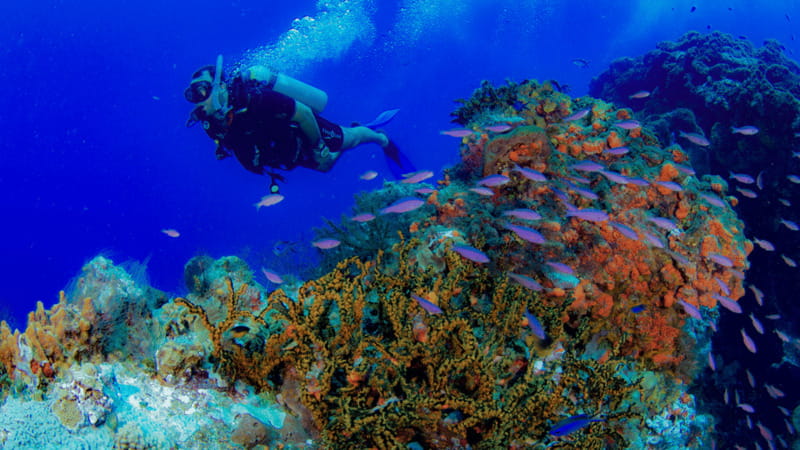
This is not presented as a technical scuba outing. The statues are around 30 feet down, and the activity is described as suitable for a refresher or for juniors who already meet the certification requirement.
That makes the trip a reasonable choice if you have Open Water certification but have not used your skills recently. You still need to be comfortable underwater, control your breathing, and follow your instructor’s directions. Certification alone does not remove the need to assess your own comfort and fitness.
The operator requires you to show your Open Water certificate. You also need to complete the medical form before the activity. If you answer yes to any of its health questions, you will need authorization from your doctor.
The outing is not suitable for people with respiratory issues, recent surgeries, mobility impairments, or for wheelchair users. Pregnant women and people over 65 are also excluded under the stated rules. Children under 10 cannot participate, and uncertified scuba participants cannot join.
Those limits may feel strict, but they are important in an activity involving boat travel, equipment, and time underwater. If you are unsure about your medical clearance, sort that out before booking rather than at the front desk.
A few more Cancun trips worth weighing up
- Isla Mujeres Snorkeling Adventure at the Underwater Museum
★ 4.5 · 219 reviews - Jungle Tour & Snorkel at Punta Nizuc Reef , Underwater museum
★ 4.5 · 201 reviews - Scuba Diving Under Water Museum and Reef for beginners
★ 5.0 · 189 reviews - Scuba diving at MUSA the underwater museum for certified divers
★ 5.0 · 102 reviews
What the $98 price really covers
At $98 per person, the price includes an instructor and two Cancún scuba tanks. That is a fair way to judge the cost, since this is not simply a boat ride to a viewing platform. You receive guided access to two underwater sites and the equipment support needed for both descents.
Still, the advertised price is not the complete out-of-pocket cost. Add the $20 reef preservation fee per person. Photos and videos are not included, and a wetsuit is available for rent or purchase at the operator’s boutique.
That last point matters if you are trying to keep costs predictable. Bring your own suitable wetsuit if you have one, or ask about the rental charge before the outing. The same goes for underwater photos. If the statues are a major reason you booked, you may be tempted to buy a photo package, but it is an extra rather than part of the $98.
For someone who already has scuba certification and wants two contrasting underwater settings in a half-day, the package can offer good value. It is less attractive if you mainly want a quick look at the museum or if you need to rent several pieces of equipment. In that case, the final bill may feel noticeably higher than the starting price.
Timing, check-in, and the 4.5-hour schedule
The full activity lasts about 4.5 hours. Check-in takes place at the main front desk, and you should arrive with your certification ready to show.
The schedule is long enough for boat travel, preparation, two underwater visits, and the transitions between them. Do not book this immediately before an important afternoon commitment. The overall timing can change, and one participant had a morning outing postponed until the following day without receiving advance notice.
That report also points to a practical concern: communication about changes may not always arrive before you reach the meeting point. Confirm the start time and check for updates before leaving your accommodation, especially if your day depends on a tight schedule.
The activity offers free cancellation up to 24 hours before departure and allows you to reserve without paying immediately. Those terms are useful when your Cancún plans are still shifting, though they do not guarantee that weather or operating changes will never affect the day.
What to bring and what to expect at the front desk
Bring your Open Water certification. Without it, you cannot take part, even if you have watched scuba instruction videos or previously snorkeled.
You should also be ready for the separate reef preservation charge. If you want underwater photos or videos, ask about those before leaving. They are not included in the package.
A wetsuit is not included. You can rent or buy one at the boutique, so decide ahead of time if you need it. The provided information does not specify water temperature or a required thickness, so ask the operator what is appropriate for your date.
Alcohol and drugs are not allowed. Baby carriages are also not permitted, though the age minimum already makes this an outing for older children and adults.
The meeting instruction is simple: check in at the main front desk. Since no personal guide names are provided, expect to be assigned an English- or Spanish-speaking instructor rather than booking a named guide.
Who will enjoy this Cancún excursion most
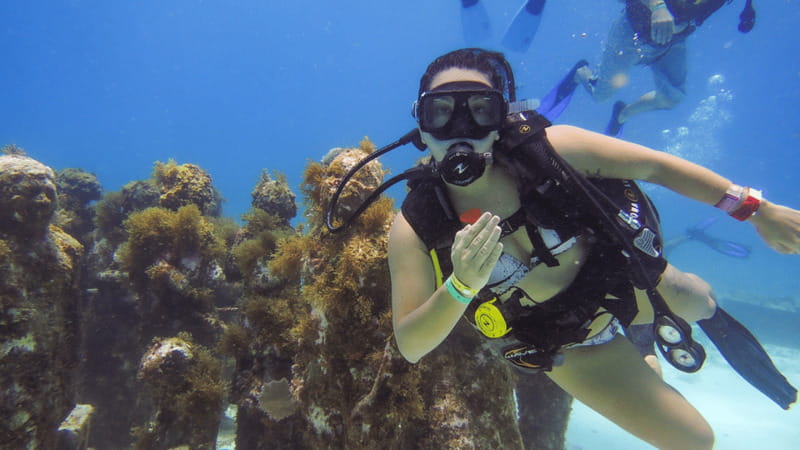
I would recommend this for a certified scuba participant who wants something more unusual than a standard reef outing. The combination of underwater art and natural coral gives you two distinct subjects within one half-day.
It also suits someone returning to scuba after time away. The relatively shallow museum setting can serve as a refresher, provided you meet the health and certification requirements and feel ready to return to the water.
This is not the right choice if you want a dry, easy sightseeing activity. You need to be comfortable with scuba equipment and underwater conditions. It is also a poor fit for anyone who cannot provide Open Water certification or who falls within the stated health and age restrictions.
If your top priority is photographing every statue, manage your expectations. The collection is extensive, but the visit may cover only part of it. If your goal is to see a memorable underwater setting and then encounter natural reef life, the format makes much more sense.
How this compares with a regular reef outing
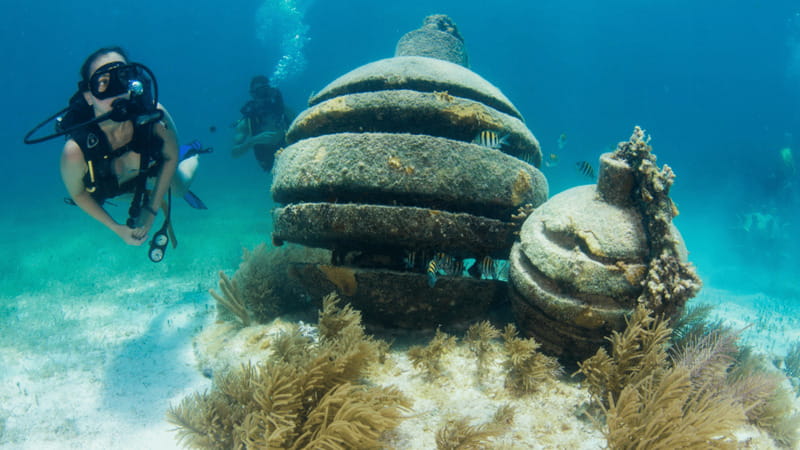
A conventional reef trip gives you natural coral, fish, and the chance of seeing turtles or rays. MUSA adds a strong visual theme. Human figures give you something specific to study, and the coral growing over them creates a scene you cannot reproduce at a land-based museum.
The trade-off is that artificial reef art can feel less wild than natural coral. Some people will prefer the quiet geometry of the statues. Others will find the second reef visit more rewarding because the marine life feels less planned.
I like having both in one booking. You do not have to choose between art and nature, and the contrast makes each part more interesting. The museum also carries an environmental purpose, since the installations were created in part to help natural reefs recover by offering another surface for coral growth.
Book it or skip it?
Book this excursion if you hold an Open Water certificate, want a shallow and unusual scuba outing, and like the idea of pairing underwater sculpture with a natural reef. The turtles, stingray, and colorful fish add real appeal, but the art collection is the main reason to choose it over a standard reef trip.
Skip it if you need guaranteed wildlife, a full tour of every MUSA statue, or a tightly controlled schedule. Budget for the $20 reef fee and possible wetsuit or media charges, and confirm the departure details before you set out.
For the right participant, the two-part format is memorable and fairly priced. Just think of it as a guided glimpse into a huge underwater gallery, followed by a chance to see the reef on its own terms.
FAQ
How long does the Cancún underwater museum activity last?
The activity lasts approximately 4.5 hours.
How many scuba tanks are included?
Two Cancún scuba tanks are included, one for each underwater visit.
Do I need scuba certification?
Yes. You must present an Open Water Certification to participate.
How deep are the underwater statues?
The statues are located about 30 feet underwater.
What marine life might I see?
The natural reef is home to colorful fish and turtles, and a stingray has also been seen during the outing. Wildlife sightings are not guaranteed.
Is the reef preservation fee included?
No. You must pay a separate reef preservation fee of $20 USD per person.
Are photos and videos included?
No. Photos and videos are not included in the activity price.
Can I cancel for a full refund?
Yes. You can cancel up to 24 hours in advance for a full refund.
Just added around Cancun
- Tequila Master Class & Gourmet Tacos- Exclusive Experience Cancun★ 5.0 · 3 reviews
- Cancun Airport Shared Transfer★ 4.5 · 3 reviews
- Full Day Tour of Isla Holbox and Isla Pasión with Cenote★ 4.0 · 3 reviews
- Amazing adventure! Kaan Luum Lagoon, 2 Cenotes Tour★ 4.5 · 3 reviews
- Whale Shark from Cancun, Riviera Maya and Tulum All Inclusive★ 5.0 · 3 reviews
- 4X1 Tour to Tulum, Coba, Cenote and Playa Del Carmen★ 4.5 · 3 reviews
- Isla Mujeres Full Day Tour on Yacht with Snorkel and Buffet★ 4.5 · 3 reviews
- Cozumel by transparent boat and snorkeling in the sky with lunch.★ 5.0 · 3 reviews
Scuba Diving, compared.
5-in-1 Cancun Snorkeling: Turtles, Reef, Musa, Shipwreck, Cenote
Read our review →
Diving in the Mexican Caribbean for Beginners | 2 Tanks 2 Dives | All Inclusive
Read our review →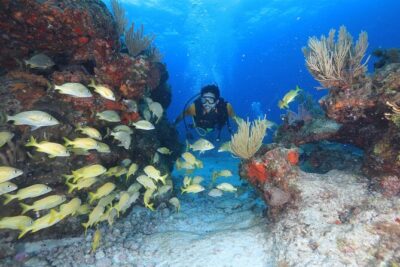
Two Tanks Scuba Diving for Beginners in Cancun
Read our review →
Isla Mujeres Snorkeling Adventure at the Underwater Museum
Read our review →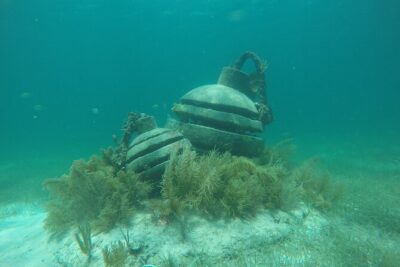
Jungle Tour & Snorkel at Punta Nizuc Reef , Underwater museum
Read our review →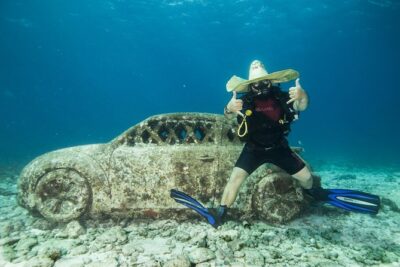
Scuba Diving Under Water Museum and Reef for beginners
Read our review →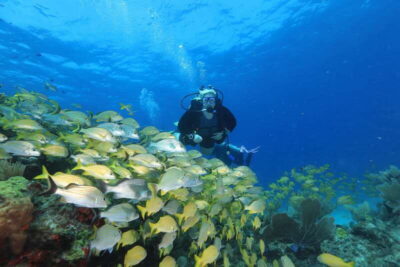
Browse the lists this tour appears in